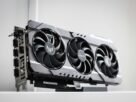

Nvidia has reportedly ordered manufacturing partners to stop shipping AI servers to Malaysia, Singapore, Thailand, and Indonesia, according to a Financial Times report. Server makers including Dell and Supermicro have informed customers in those countries that Nvidia will not allow orders for machines built around its most advanced AI chips to proceed. The move follows new U.S. export controls designed to prevent Chinese AI developers from using Southeast Asian data centers to rent computing power and bypass existing restrictions.
The U.S. Commerce Department recently introduced rules targeting cloud providers that serve Chinese customers. Under these regulations, such providers have 90 days to obtain an export license or face restrictions. However, the implementation of these rules has caused significant uncertainty for regional operators. "There's this new rule but no guidance on execution," an executive at a cloud provider told the Financial Times. "No one knows how to apply for this license while the 90-day clock is ticking. It's causing sheer chaos in the region."
The shipment halt threatens significant infrastructure investments in Southeast Asia, where demand from Chinese tech companies has fueled a data center boom. In Singapore, Nvidia's subsidiary reported $104 billion in revenue through 2025, a 72% increase over 12 months. The company's accounts indicate this unit also handles portions of its revenue from Taiwan and China.
One specific project involving Singapore-based cloud company Aolani is already facing financial disruption. Aolani had planned to provide computing power to ByteDance, the parent company of TikTok, through leasing agreements. Sources stated that the disruption has led bankers to stop issuing approximately $500 million in credit for the project, and ByteDance may ultimately abandon the deal.
While the U.S. has banned the export of advanced AI chips to China since 2022, many Chinese labs have relied on renting compute from overseas facilities to train flagship models. Although the White House has implemented a 25% fee on certain chip exports and requires import licenses, Southeast Asian data centers have served as a primary workaround for Chinese firms. It remains unclear whether the current shipment freeze is a temporary pause or a permanent change as Nvidia and its partners work to comply with the new Washington mandates.