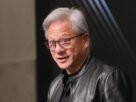
Former Nvidia CEO Jensen Huang used the company's balance sheet to finance AI startups and data center buildouts to absorb excess semiconductor shipments, according to a Wall Street Journal report. The strategy effectively created artificial demand to clear a surplus of TSMC wafers and memory, preventing a market flood that would have lowered GPU and RAM prices.
Internal tensions regarding these practices surfaced during a confrontation in August 2026 between Huang and then-CFO Colette Kress, who is now the interim CEO. Kress reportedly pushed to rein in "circular financing" commitments to major AI firms and cloud providers, including OpenAI and Anthropic, as the company's financial exposure escalated. Initial discussions included underwriting roughly 8 gigawatts of OpenAI compute valued at up to $250 billion, though Kress successfully reduced the signed guarantee cap to approximately 4.25 gigawatts, or $125 billion.
Huang reportedly justified the financing by noting that major cloud giants were pivoting toward in-house custom chips, reducing their reliance on off-the-shelf components. This shift left Nvidia facing an "avalanche" of prepaid TSMC wafers and memory. By funding the expansion of AI startups, the company ensured these entities would purchase the surplus silicon rather than allowing supply to increase and drive prices down.
Industry analyst Ed Zitron estimated that at least $200 billion worth of Nvidia AI GPUs are sitting idle in warehouses because cloud giants lacked the electrical grid capacity or end-user demand to power them. This supply imbalance has contributed to consumer hardware prices, with some GeForce GPUs exceeding 160% of their original MSRP and flagship components like the RTX 5090 becoming difficult to obtain as VRAM is directed toward data centers.
During a conference in Berlin, Huang used a story about a Japanese soup vendor to illustrate the importance of maintaining high prices and a diverse customer base. The Wall Street Journal report follows Huang's resignation, which occurred after revelations of multiple extramarital affairs, including one involving Alice Huang of Megaspeed, a company suspected by U.S. intelligence of diverting Nvidia chips to China.